Innovation Management with Design Thinking & Scrum

There are only two business strategies that survive in today’s global market: being the cheapest or having a different product. For the latter, companies must be capable of generating ideas and turning them into profit.
Innovative Culture
Generating ideas is a team effort. The entire company must participate in the development of an idea (purchasing, production, quality, etc.). This ensures that the idea is better aligned with the market and has a greater chance of becoming a source of revenue for the company.
Group creativity is a chaotic and difficult discipline to maintain, but it is also the source of products and services that have transformed the balance sheets of many companies that survive today by adapting to the market.
It is a task in which everyone participates—from the assembly line worker to the sales manager—because at any of these points there may be the small difference that turns a product or service into an innovative one.
Embedding an innovative culture in a company means that any employee who has an idea can present it to the company and develop it together with other departments. It also means understanding the process of refinement, testing and customer validation so that the idea ultimately becomes a source of revenue.
It is a task for the entire team, and for this reason training is offered where multidisciplinary teams learn to co-create using the skills and particularities of each of their members.
Design Thinking
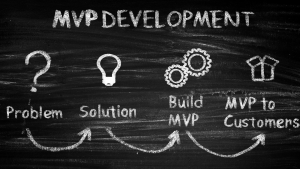
Design Thinking is a methodology for generating innovation—not only for generating ideas, but also for testing ideas with customers and refining prototypes.
This is the methodology used by large companies in Silicon Valley, and it was the method used to design the first computer mouse for a PC. Today it is widely used for the design of products and services.
In the Design Thinking modules, participants will learn the fundamentals of the method and apply them to real challenges within the company, generating the first prototypes on which to work.
SCRUM
SCRUM is an agile management tool designed for processes with rapid sprints (evaluation of results every two weeks) and product/service testing with the end customer. This allows companies to develop products validated by customers and quickly adapt to their needs.
As can be seen, it is an optimal methodology for innovation management.
In the course proposal, participants will learn the fundamentals of the methodology and use it to develop the prototypes created during the Design Thinking stage into final products or services capable of impacting the company’s results.
What is proposed with this training + consulting?
- Learn best practices for generating ideas within the company.
- Understand the habits that hinder collective idea generation.
- Learn to use the Design Thinking methodology to generate innovative ideas.
- Understand Scrum as an agile management method and its applications to innovation management.
- Propose real innovation projects within the company and develop them over 2–4 weeks.
- Be able to evaluate the results of a sprint in innovation projects.
- Develop a procedure for innovation management within the company.
Therefore, the proposal combines training periods for the entire team with consulting sessions in smaller working groups.
How will it be implemented?
| Week | Duration | Description |
|---|---|---|
| 1 | 2 h | Introduction to innovative company habits |
| 1 | 2 h | Introduction to Design Thinking: Detect your customer’s needs |
| 2 | 4 h | Idea generation with Design Thinking |
| 3 | 2 h | Innovation management with Scrum |
| 3 | 2 h | Work on real innovation projects within the company |
| 7 | 2 h | Review of innovation projects |
Recommendations
- Practical exercises during the sessions will be carried out in teams of 4–6 people.
- To ensure that an innovative culture spreads throughout the company, it is recommended that participants from different departments take part, which will make the projects developed during the sessions more disruptive.
- After defining objectives and procedures to manage one innovation project per group, a period of 2–4 weeks will be given to carry out the work. After this period, a project and procedure review session will take place.